

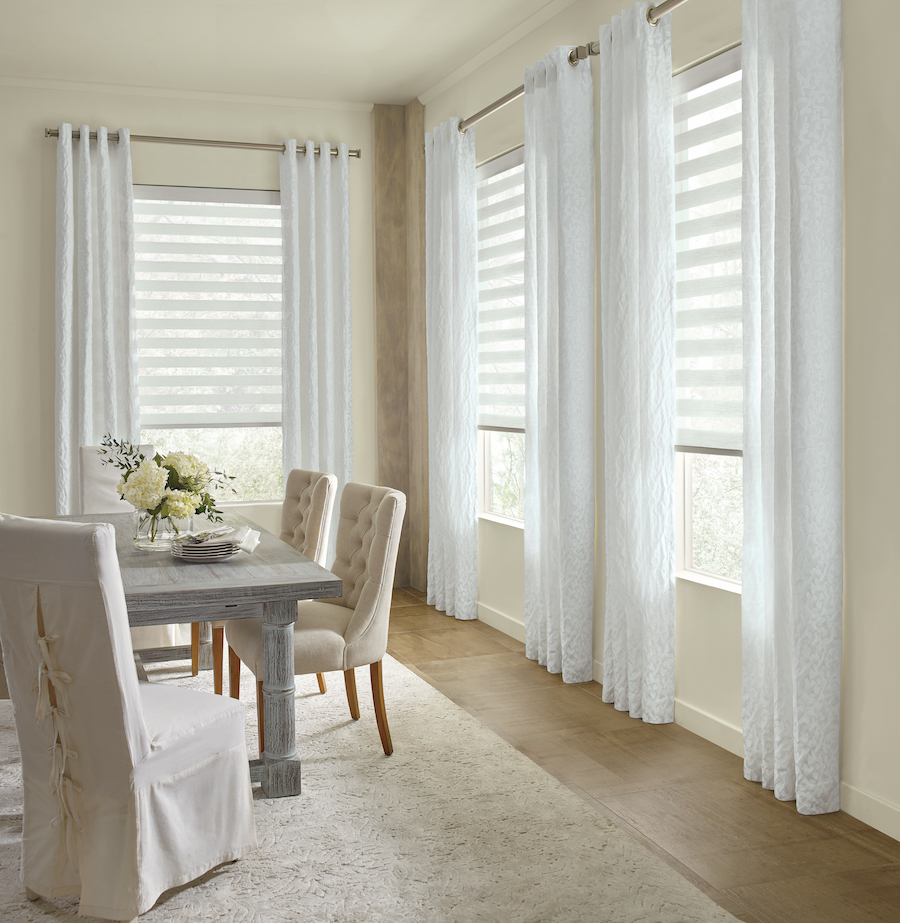
Selecting window treatments requires balancing light management, spatial aesthetic, and privacy. Windows establish the visual anchor of a room, bridging indoor design with natural outdoor lighting. Choosing improper fabrics, lengths, or hardware diminishes the overall interior space. A structured approach ensures your window coverings contribute sophistication while maintaining seclusion from outside eyes.
Layering Fabrics for Versatility and Sophistication
Layering window treatments gives you maximum control over natural light while securing complete privacy day or night. Combining lightweight materials with substantial drapes creates depth and texture along your walls.
-
Combine Sheers with Opaque Drapes: Translucent sheer curtains diffuse harsh sunlight during daylight hours without blocking your view of the outside world. Pairing sheers with blackout or heavy linen drapes on a double curtain rod allows you to pull the heavier panels closed at night for complete isolation.
-
Integrate Shades Under Curtain Panels: Installing Roman shades or woven wood shades directly inside the window frame provides a tailored baseline layer. Adding floor-length drapery panels on the outside frames the window, softening straight lines and adding a luxurious vertical element to the room.
-
Match Textures thoughtfully: Combine smooth, polished fabrics with raw, woven materials. Velvet outer panels pair exceptionally well with woven bamboo shades, establishing a balance between casual warmth and upscale elegance.
Selecting Proper Hardware and Placement
Incorrect hardware installation often makes a room feel smaller or less grand. Elevating curtain hardware creates an illusion of higher ceilings and expansive floor plans.
-
Mount Hardware High and Wide: Position your curtain rod four to six inches above the window frame, or bring it all the way up near the crown molding. Extend the rod three to six inches beyond the sides of the frame. This mounting strategy allows curtains to rest against the wall when open, exposing the full glass area and maximizing light entry.
-
Choose Substantial Rod Diameters: Thin metal rods bend over time and look disproportionate against large drapes. Opt for curtain rods measuring at least one inch in diameter made of solid wood, brushed brass, or matte black iron.
-
Match Finials to Room Accents: Select hardware finishes that complement existing door handles, light fixtures, and cabinet hardware. Coordinated metals unify the room design seamlessly.
Choosing Materials Based on Room Function
Every room demands specific material qualities based on moisture exposure, light exposure, and usage patterns.
Living Rooms and Formal Spaces
Living rooms benefit from flowing, high-end textiles that make a statement. Silk, velvet, and heavy linen blends introduce Movement and richness. Linen offers a relaxed yet tailored look, whereas velvet provides sound absorption and formal structure.
Bedrooms
Bedrooms prioritize complete darkness and insulation. Opt for lined drapery panels combined with cellular shades. Thermal linings keep cold drafts out in winter and block heat gain during summer months, supporting better sleep environments.
Kitchens and Bathrooms
High-moisture environments require synthetic materials or specialized treatments. Faux wood blinds, moisture-resistant roller shades, and washable cotton valances resist warping and mildew caused by humidity and steam.
Tailoring Lengths and Hem Styles
The way fabric meets the floor dictates the overall mood of the space. Custom measurements elevate standard retail panels into bespoke installations.
-
Floor-Touching Hems: The curtain hem sits precisely one-quarter inch off the floor. This clean line appears tailored, modern, and prevents dust accumulation on the fabric edge.
-
Slight Break Hems: Allowing one inch of extra fabric to sit on the floor creates a classic, relaxed look suited for traditional and farmhouse interiors.
-
Puddling Fabric: Extending the panel length by three to six inches causes fabric to pool elegantly on the floor. While highly dramatic and formal, puddles require extra maintenance and suit low-traffic areas like guest rooms or formal dining spaces.
Utilizing Motorization and Smart Controls
Modern window treatments incorporate technology to streamline daily routines while optimizing energy performance.
Automated roller shades and motorized drapery tracks allow you to schedule opening and closing times based on sun positioning. Automated schedules prevent interior furniture from fading due to ultraviolet exposure and maintain privacy consistently without manual adjustments. Battery-operated wireless motors eliminate visible cords, enhancing safety for households with children or pets.
Incorporating Custom Trims and Detailwork
Customizing off-the-shelf panels with decorative trims elevates simple designs into personalized features.
-
Edge Tape and Fringe: Adding grosgrain ribbon, velvet tape, or fringe along the inner vertical edge of drapery panels draws the eye up and creates a crisp outline against light walls.
-
Structured Headers: Replace standard rod-pocket tops with tailored pleats. Pinch pleats, pinch-ball pleats, and inverted box pleats establish uniform folds that fall smoothly to the floor.
-
Valances and Pelmets: Installing upholstered box valances across the top of the window hides tracks, rods, and architectural defects while providing a clean, architectural finish.
Frequently Asked Questions
How do I choose window treatments for arched or oddly shaped windows?
Mount drapery hardware above the curved arch on the flat wall surface to frame the window without obscuring its unique shape. Alternatively, install custom-fit inside-mount shades specifically designed for unique geometric angles.
What is the best window treatment option for maximum thermal efficiency?
Cellular or honeycomb shades offer superior thermal insulation. Their stacked air pockets trap heat near the glass, preventing heat transfer and significantly lowering energy bills throughout winter and summer.
Can I mix different window treatment styles within an open-concept room?
Yes, you can mix styles as long as you maintain consistent color palettes and fabric tones. For example, use Roman shades on smaller side windows and matching floor-length drapes on sliding glass patio doors within the same open room.
How wide should my curtain panels be relative to the window frame?
Your combined curtain panels should measure roughly two to two-and-a-half times the width of the window frame. This guarantees the fabric maintains natural-looking folds even when the drapes are pulled completely closed.
How do top-down bottom-up shades improve privacy?
Top-down bottom-up shades allow you to lower the top section of the shade to let natural daylight filter in while keeping the bottom section closed to block views from neighbors or street traffic.
What window coverings work best for narrow spaces or small rooms?
Inside-mount roller shades, pleated shades, or sleek Venetian blinds fit inside the window jamb without taking up wall space, keeping small rooms uncluttered and visually open.
How often should fabric draperies and shades be professionally cleaned?
Vacuum fabric drapes using a soft brush attachment every few months to remove surface dust. Professional dry cleaning or steam cleaning is recommended every two to three years to maintain fabric structure and color richness.