

A home programme does not plateau merely because it happens at home. It plateaus when the available exercises and resistance can no longer create a clear, recoverable progression. Moving to a fitness gym Singapore is most valuable when the facility solves a specific constraint, not when it simply adds more exercise options.
The first task is to identify what has stopped progressing. Is load capped? Are sets becoming excessively long? Does the home setup limit range, safety or exercise choice? The answer determines which gym resource matters.
Confirm That the Plateau Is Real
One difficult week is not a plateau. Performance fluctuates with sleep, stress, nutrition, illness and scheduling. A meaningful plateau is a repeated lack of progress under reasonably consistent conditions.
Review four to six weeks of training data:
- load or resistance used
- repetitions completed at a consistent technique standard
- number of hard sets
- proximity to failure or perceived effort
- range of motion and tempo
If none of these can improve without technique deteriorating, the programme may need a new stimulus. If the log is inconsistent, better execution may be needed before more equipment.
Constraint One: The Resistance Ceiling
Adjustable dumbbells, bands and bodyweight variations can support substantial progress. Eventually, some movements outgrow the available resistance. The user may respond by adding repetitions, slowing tempo or choosing a harder variation. Those strategies work, but they also change the training task.
A long set of split squats can become limited by breathing, balance or discomfort before the legs receive the intended loading. Heavier dumbbells, barbells or plate-loaded machines can return the set to a more practical repetition range.
Research comparing different resistance-training loads suggests that muscle growth can occur across a range of loads when sets are sufficiently challenging, while higher loads tend to favour maximal strength gains. See this systematic review and meta-analysis for the distinction. The practical implication is not that heavier is always better. It is that access to heavier loading expands the outcomes that can be trained efficiently.
Constraint Two: The Resistance Profile
Bands and free weights do not challenge a movement equally at every point. Bands generally increase tension as they stretch. Free weights depend on gravity and changing joint leverage. Cable systems can maintain a chosen line of pull through positions that are awkward to load at home.
This makes cables useful for more than variety. They can create:
- lateral resistance for shoulder and hip work
- adjustable high-to-low or low-to-high pulling angles
- consistent loading in standing or half-kneeling positions
- small load increments for isolation exercises
- bilateral or unilateral options without buying separate implements
The progression is meaningful when the new resistance profile addresses a gap in the programme. Adding five cable variations for novelty does not automatically improve results.
Constraint Three: Safe Setup at Higher Effort
Home training often relies on lifts that can be started and finished without a rack, spotter arm or heavy bench. As effort rises, setup may become the limiting factor.
A rack with adjustable safeties can support squats and presses when correctly configured. Stable benches can provide repeatable angles. Machines may allow hard sets without having to clean dumbbells into position or return them to the floor after fatigue.
Safety equipment does not remove responsibility. The user still needs to understand adjustment points, load securely and respect the equipment’s intended use. The advantage is that the environment can support progressive loading with fewer improvised solutions.
Constraint Four: Increment Size
Progress stalls when the next available jump is too large. If a home dumbbell moves from 20 kg to 25 kg, that 25 percent increase may be unrealistic for an isolation exercise. A gym with smaller plates, a complete dumbbell run or selectorised stacks can offer finer progression.
Micro-progression matters most when:
- the exercise uses relatively light loads
- the trainee is experienced enough that gains are slower
- technique changes when the load jump is large
- one side is being trained independently
A smaller increment is not less ambitious. It can be the most direct way to preserve movement quality while load increases.
Constraint Five: Feedback and Coaching
Equipment cannot solve a programming error. If exercise selection, weekly volume or effort distribution is poorly matched to the goal, a larger facility may simply enable more unproductive work.
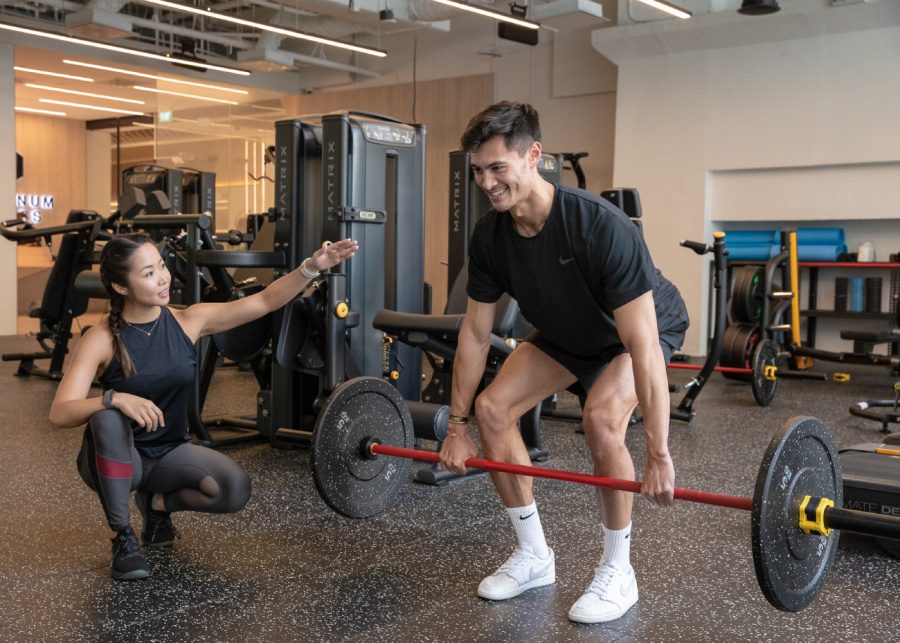
Coaching can create a new stimulus by improving decisions. A qualified trainer can review exercise execution, help establish realistic progression criteria and identify whether the plateau is local to one lift or systemic across the week. The value is not constant supervision. It is better problem definition.
Useful coaching questions include:
- Which metric has stopped improving?
- Is the target muscle or another factor limiting the exercise?
- Has weekly volume increased without a recovery benefit?
- Which new tool changes the constraint rather than the appearance of the workout?
Build a Hybrid Programme, Not a Complete Replacement
Home training can remain valuable after joining a gym. Short home sessions may handle mobility, low-equipment accessories or conditioning. Gym sessions can focus on movements that genuinely require heavier loading, cables, racks or machines.
For example:
- Gym Day 1: squat pattern, heavy pull, cable accessories
- Home Day: mobility, push-ups, band work and trunk training
- Gym Day 2: press pattern, hinge, machine accessories
This structure protects convenience while using the facility for its highest-value resources.
Audit the Facility Against the Plateau
Before changing the programme, list the exact resources required. If the plateau involves lower-body loading, inspect racks, leg machines and dumbbell limits. If it involves pulling angles, inspect cable adjustability and handle options. If it involves uncertainty, evaluate coaching access.
The equipment, classes and personal training described by TFX Singapore can be reviewed against this constraint list. The decision should come from programme fit, not from the abstract idea that a commercial gym is automatically more advanced than a home setup.
Run a Six-Week Stimulus Test
Keep most of the existing programme stable and add only one or two facility-dependent changes. Track load, repetitions, effort and recovery. If performance resumes without excessive fatigue, the new resource is doing useful work.
If progress does not resume, avoid adding more exercises immediately. Reassess total volume, technique, sleep, nutrition and goal clarity. A plateau is a diagnostic problem, not a demand for endless novelty.
Frequently Asked Questions
Do high-repetition home workouts stop building muscle?
Not automatically. Challenging sets across a broad load range can support hypertrophy. Very long sets may become inefficient or limited by factors other than the target muscle.
Which gym resource usually matters first?
It depends on the constraint. Common answers are heavier loads, smaller increments, safer rack setups, adjustable cables or qualified feedback.
Should every home exercise be replaced at the gym?
No. Keep movements that remain effective and convenient. Replace only those whose progression is constrained by the home environment.
How long should a new stimulus be tested?
Six weeks is often enough to see whether performance is moving, provided the exercise, effort and recovery conditions are recorded consistently.