

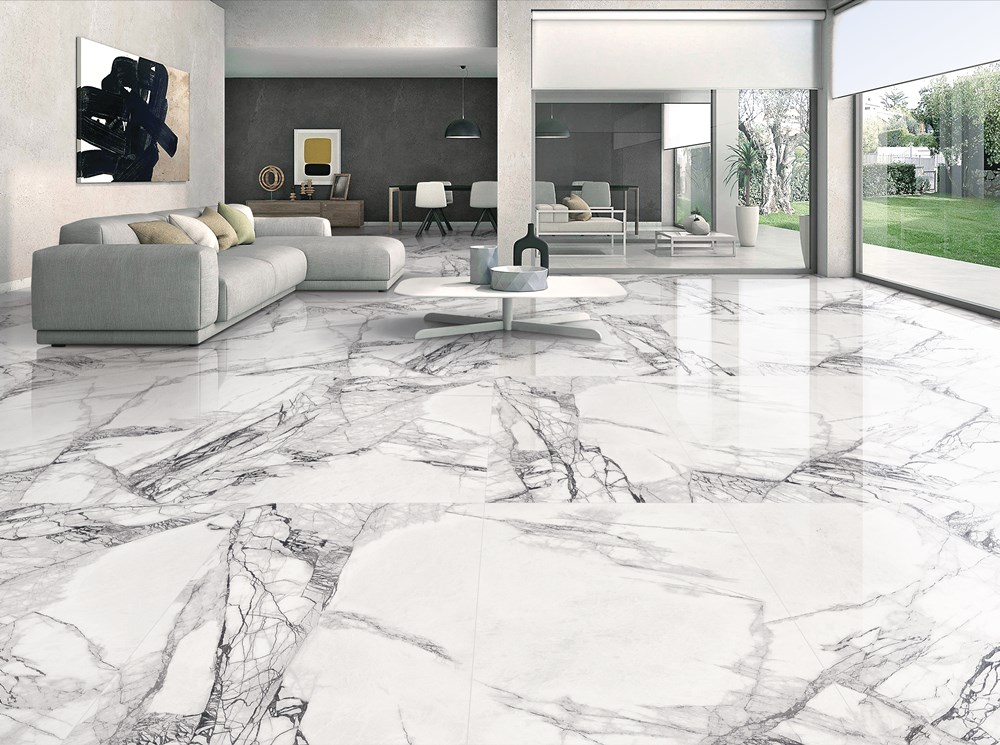
Tile flooring has evolved from a purely functional, moisture-resistant coating into one of the most expressive design elements in residential and commercial architecture. Thanks to advancements in digital inkjet printing, manufacturing precision, and raw material engineering, modern tiles can replicate natural wood grains, polished marble veining, raw concrete, and antiqued cement with surprising realism. Selecting the ideal tile involves balancing aesthetic preference with physical properties such as water absorption, traffic endurance, slip resistance, and maintenance demands.
This guide breaks down current tile materials, visual trends, layout patterns, performance metrics, and room-by-room applications to help you choose the right surface for your project.
Core Tile Materials and Their Properties
Understanding the base composition of a tile is essential because material characteristics dictate where and how a tile can be installed.
Porcelain Tile
Porcelain is a specialized subset of ceramic made from dense, highly refined kaolin clay fired at extreme temperatures, typically between 2,200 and 2,400 degrees Fahrenheit. This process creates a vitrified material with a water absorption rate of less than 0.5 percent.
-
Durability: High resistance to scratches, impacts, stains, and thermal shock.
-
Best Applications: High-traffic areas, kitchens, bathrooms, mudrooms, and outdoor patios in frost-prone climates.
-
Varieties: Available as through-body porcelain, where color runs through the entire thickness, or glazed porcelain, which features a printed surface design over a dense substrate.
Ceramic Tile
Standard ceramic tile is crafted from natural red or white clay, mineral fillers, and water, fired at lower temperatures than porcelain. It is softer, lighter, and easier to cut during installation.
-
Durability: Moderate durability suitable for light to medium foot traffic.
-
Best Applications: Residential bathrooms, laundry rooms, accent walls, and low-traffic interior living areas.
-
Key Considerations: Glazed ceramic tiles offer good stain resistance, but unglazed versions must be sealed to prevent water absorption.
Natural Stone Tile
Cut directly from quarried rock, natural stone tiles offer unique veining, depth, and variation. Common species include marble, granite, limestone, travertine, and slate.
-
Durability: Varies by stone density; granite is extremely hard, while marble and travertine are softer and porous.
-
Best Applications: Foyers, primary bathroom suites, fireplace surrounds, and luxury living spaces.
-
Key Considerations: All natural stone requires routine sealing to guard against etching from acids and deep staining from oils or water.
Cement and Encaustic Tile
Encaustic and cement tiles are crafted using a combination of Portland cement, fine sand, and natural mineral pigments pressed under high hydraulic pressure rather than fired in a kiln.
-
Visual Character: Distinctive matte finish with rich, handcrafted color patterns and vintage motifs.
-
Best Applications: Powder rooms, entryway focal points, kitchen backsplashes, and decorative border accents.
-
Key Considerations: Highly porous nature requires thorough sealing prior to grouting and regular sealing over time.
Top Visual Styles and Surface Effects
Modern tile design is defined by surface realism and tactile texture. Digital manufacturing allows tile surfaces to mirror non-ceramic materials while retaining the water resistance and longevity of hard surfaces.
Wood-Look Porcelain Planks
Wood-look tiles combine the warmth of hardwood with the durability of porcelain. Modern high-definition printing reproduces knots, grain patterns, and hand-scraped textures across long rectangular plank formats such as 6×36, 8×48, or 9×60 inches.
-
Advantages: Unlike real hardwood, wood-look porcelain will not warp, swell, or scratch when exposed to liquid, making it ideal for kitchens, basements, and full bathrooms.
-
Design Tip: Select tiles with high pattern variation across individual pieces to create a realistic floor appearance, and use narrow grout lines matched closely to the tile background color.
Marble-Look Porcelain
Marble-look porcelain recreates the classic elegance of Italian stones like Calacatta, Statuario, and Carrara without the high maintenance and staining vulnerabilities of true marble.
-
Surface Finishes: Offered in high-gloss polished finishes for reflecting light, or honed matte finishes for enhanced slip safety and subtle texture.
-
Design Tip: Large format marble tiles with continuous veining create an expansive feel in primary bathrooms and grand entryways.
Concrete and Industrial Stone Styles
Industrial minimalist design has popularized tiles that mimic poured concrete, brushed plaster, and slate stone.
-
Aesthetic Appeal: Neutral palette consisting of warm grays, charcoals, taupes, and muted beige.
-
Best Uses: Open-concept living areas, urban lofts, and contemporary kitchens seeking a clean, uninterrupted floor plane.
Terrazzo Style Tile
Terrazzo features embedded chips of marble, quartz, granite, or glass suspended in a cementitious or resin base. Contemporary porcelain reproductions offer the signature speckled look in a low-maintenance, easily installed format.
-
Aesthetic Impact: Adds playful texture, historical character, and visual movement to compact spaces like powder rooms and utility spaces.
Structural Formats and Laying Patterns
The size and orientation of a tile drastically affect spatial perception. Changing the laying pattern can make small rooms appear larger, ceiling heights feel taller, or simple tiles look custom-designed.
Large Format Tiles (LFT)
Large format tiles are defined as any tile with at least one edge measuring 15 inches or greater. Common dimensions include 12×24, 24×24, 24×48, and ultra-large porcelain slabs up to 48×110 inches.
-
Fewer Grout Lines: Reduces visual clutter, creating a seamless appearance that makes small rooms feel open.
-
Installation Requirements: Requires a flat substrate with minimal floor deflection and self-leveling underlayments to avoid tile lippage.
Herringbone Layout
Created by laying rectangular tiles at a 45-degree angle in a zigzag pattern, herringbone adds architectural interest and directional flow.
-
Best Tile Formats: 3×12, 4×16, or wood-look planks.
-
Visual Effect: Draws the eye outward, creating the illusion of width in narrow hallways or galley kitchens.
Chevron Layout
Unlike herringbone, chevron tiles are cut at an angle at the short ends so they meet at a crisp, continuous point to form a straight V-shape line.
-
Visual Effect: Highly geometric, refined, and structured appearance suitable for feature walls and transitional rooms.
Hexagon Tile Arrangements
Six-sided hexagon tiles range from micro-mosaics (1 to 2 inches) to large format porcelain (8 to 14 inches).
-
Versatility: Works well as an edge transition, allowing a soft, staggered transition from tile to hardwood flooring in open floor plans.
Selecting Floor Tile by Room
Every area of a home subjects flooring to different performance demands. Evaluating foot traffic, moisture exposure, and maintenance expectations ensures long-term performance.
Entryways and Mudrooms
-
Primary Needs: Heavy foot traffic, grit abrasion, tracking water, and impact resistance.
-
Recommended Material: Through-body porcelain with a matte or textured finish.
-
Key Metric: Select a tile with a Porcelain Enamel Institute rating of PEI 4 or PEI 5 for maximum scratch and wear resistance.
Kitchens
-
Primary Needs: Stain resistance against food spills, drop protection, and comfort underfoot for prolonged standing.
-
Recommended Material: Glazed porcelain or dense ceramic.
-
Key Metric: Choose tiles with a Dynamic Coefficient of Friction rating of 0.42 or higher when wet to help prevent slips from liquid spills.
Primary Bathrooms and Showers
-
Primary Needs: Direct water contact, high humidity, and slip safety.
-
Recommended Material: Small format mosaic tiles on shower pans for increased grout joints that supply foot traction, alongside large-format porcelain on bathroom floors.
-
Key Metric: Low water absorption rates below 0.5 percent to prevent moisture infiltration beneath the subfloor.
Essential Maintenance and Protection Tips
Proper maintenance prolongs tile appearance and structural integrity.
-
Grout Selection: Use high-performance polymer-modified cement grout for standard applications, or epoxy grout for total water, stain, and chemical resistance in shower zones.
-
Sealing Requirements: Seal cement, natural stone, and standard cementitious grout lines immediately after installation, reapplying every one to two years.
-
Cleaning Protocols: Sweep or vacuum floors regularly to remove abrasive dirt grit. Clean tiles using pH-neutral floor cleaners rather than acidic solutions like vinegar, which can degrade grout lines over time.
Frequently Asked Questions
What is the difference between porcelain and ceramic tile?
Porcelain is made from denser kaolin clay and fired at higher temperatures than standard ceramic tile. This process makes porcelain harder, less porous, and more resistant to water absorption, scratches, and frost. Standard ceramic is lighter, easier to cut, and best suited for light traffic areas or wall installations.
How do I determine if a tile is slip-resistant enough for shower floors?
Check the tile Dynamic Coefficient of Friction rating, commonly abbreviated as DCOF. A DCOF value of 0.42 or greater is recommended for wet interior surfaces. Additionally, using smaller format mosaic tiles with frequent grout lines provides added mechanical traction underfoot in wet areas.
Can wood-look porcelain planks be installed with warm radiant floor heating systems?
Yes, porcelain and ceramic tiles are excellent conductors of heat and work effectively with both electric and hydronic radiant heating systems. The tile retains and radiates heat evenly without expanding, contracting, or warping like natural timber under temperature changes.
Why is grout selection important for modern large format tiles?
Large format tiles require narrow grout joints to achieve a sleek, continuous surface. Using high-performance modified grout or epoxy grout prevents cracking across long tile edges, offers built-in stain resistance, and reduces the need for frequent deep cleaning.
Are cement and encaustic tiles suitable for outdoor installation in freezing environments?
Unfired cement tiles absorb moisture and are susceptible to cracking in freeze-thaw cycles. For outdoor spaces in cold climates, choose frost-resistant, porcelain tiles designed specifically for exterior use instead of porous cement tiles.
How can I prevent tile lippage when installing large rectangular tiles?
Tile lippage occurs when the edge of one tile sits higher than the adjacent tile. To prevent this, ensure the subfloor is flat within strict tolerances, use a tile leveling system during installation, and use a running bond offset pattern of 33 percent or less rather than a 50 percent brick overlap.