

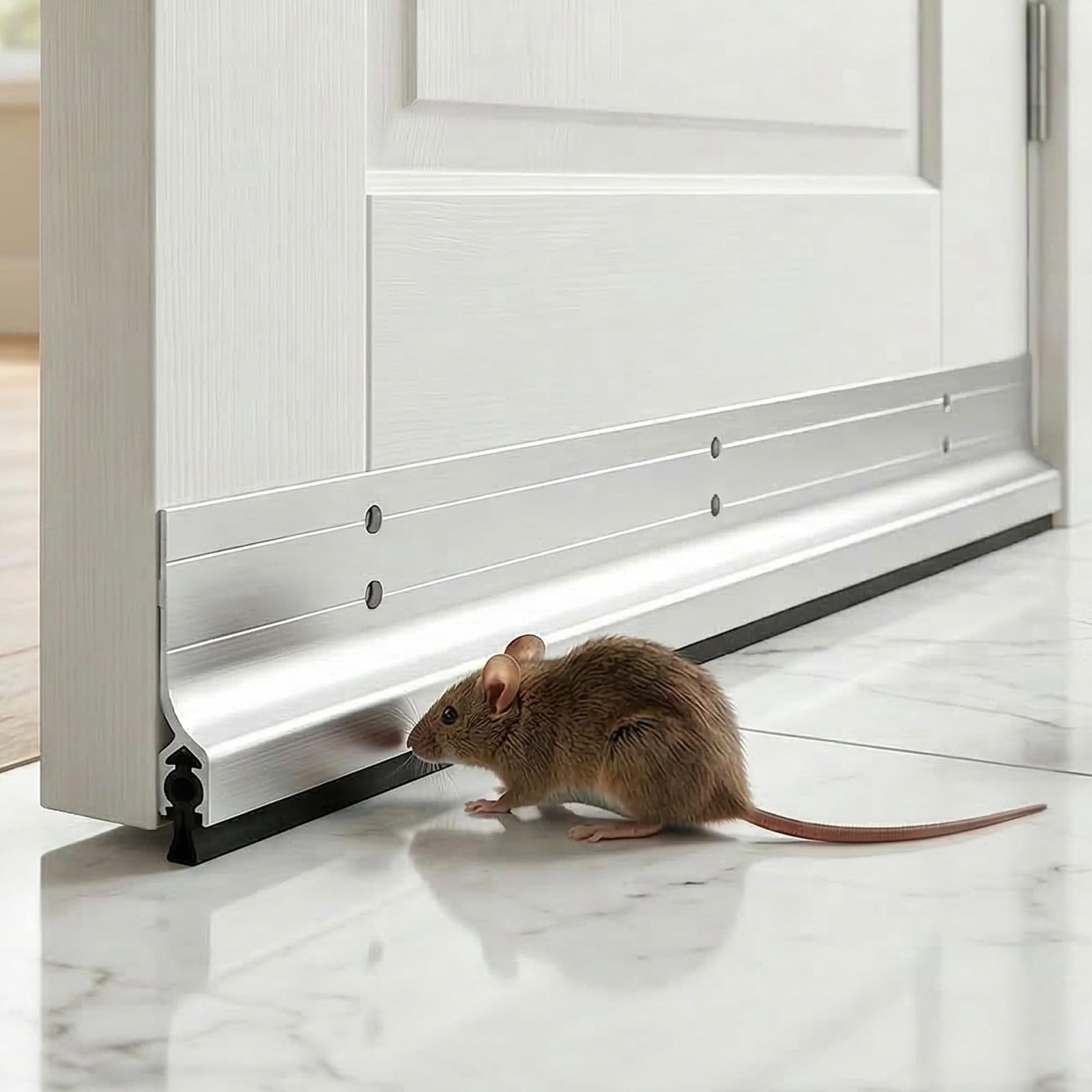
Why Garages Attract Mice and How Small a Gap They Need
Securing the Overhead Garage Door
Replace Worn Bottom Seals with Rodent-Resistant Astragals
Reinforce the Bottom Corners and Side Tracks
Check the Opener Force and Limit Settings
Sealing Pedestrian Entry Doors
Upgrade Door Sweeps and Thresholds
Seal Door Jambs and Trim Gaps
Exclusion-Proofing Electrical Outlets, Switches, and Utility Boxes
Seal Behind Outlet and Switch Cover Plates
-
Install foam outlet and switch gaskets behind every cover plate to block air drafts and close minor perimeter gaps.
-
Pack wider gaps around the outside of the electrical box with copper mesh rather than steel wool, since copper will not rust or stain drywall over time.
-
Apply a bead of fire-rated acoustic or intumescent caulk around the exterior perimeter of the junction box where it meets the drywall, ensuring no sealant enters the inside of the box or touches wire connections.
Plug Unused Knockouts and Conduit Openings
Protect Exterior Wall Penetrations Near Outlets
Materials That Actually Stop Mice (and Materials to Skip)
-
Use copper mesh or stainless steel wool: Woven metal mesh resists chewing, does not deteriorate in damp garage air, and flexes easily into irregular gaps around pipes and electrical boxes.
-
Use 24-gauge galvanized sheet metal or quarter-inch hardware cloth: For larger openings near door framing or foundation vents, rigid metal sheeting prevents mice from gnawing at wood edges.
-
Skip standard expanding foam alone: Foam works well as a backing or air seal only when paired with dense metal mesh embedded inside the gap.
-
Skip plastic corner guards and thin rubber strips: Any soft polymer without metal reinforcement can be chewed through overnight if a mouse smells food inside.