

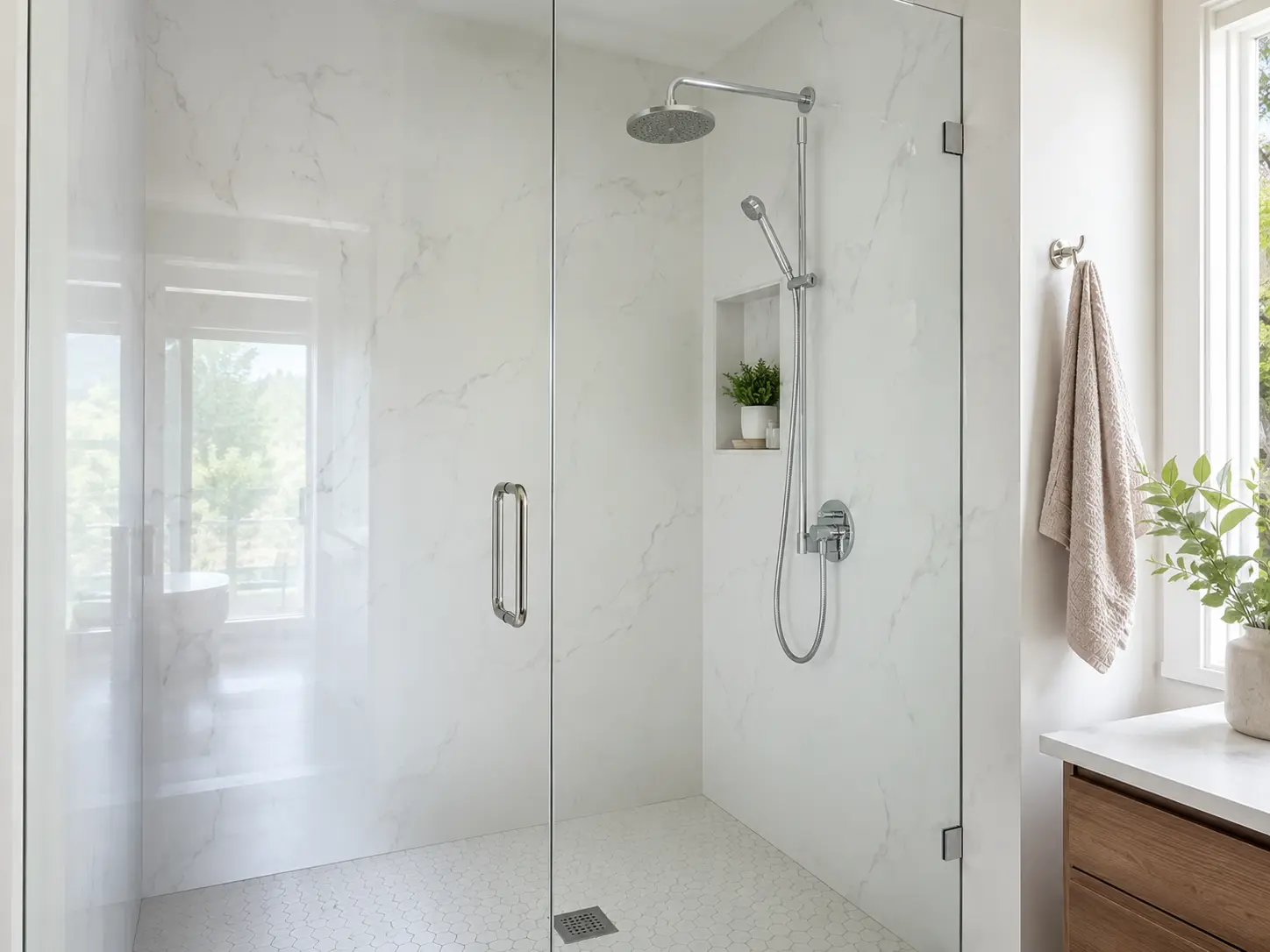
Why Homeowners Are Moving Away from Traditional Shower Tile
The Best Solid Surface Alternatives to Shower Tile
1. Acrylic-Mineral Solid Surface Panels (Corian-Style Composites)
-
Key Advantages: Minor scratches, scuffs, or hard-water stains can be buffed out easily with a fine abrasive pad, restoring the factory matte or satin finish. Panels can be fabricated with nearly invisible color-matched seams, custom recessed soap niches, and integrated corner caddies.
-
Drawbacks: Solid-surface sheets are heavy, require specialized woodworking tools with carbide blades to cut cleanly, and sit at the higher end of the price spectrum, often rivaling mid-range porcelain tile in installed cost.
2. Cultured Marble and Engineered Stone Panels
-
Key Advantages: The non-porous gel coat requires zero sealing and resists soap scum buildup. Panels are cast to order in standard alcove dimensions (such as 60 by 32 inches or 48 by 36 inches) with matching shower bases, curbs, and trim moldings.
-
Drawbacks: If a heavy object chips through the outer gel coat layer, repairing the damage cleanly is more difficult than sanding a homogeneous acrylic solid-surface panel. Harsh abrasive cleaners can also dull the finish over time.
3. Porcelain Slabs and Gauged Porcelain Tile Panels
-
Key Advantages: Porcelain slabs are completely impervious to water, heat, steam, and household cleaners. They deliver unmatched luxury aesthetics, especially in book-matched marble designs where veining mirrors seamlessly across corner joints.
-
Drawbacks: Handling fragile 10-foot porcelain sheets in tight residential hallways requires specialized suction frames, ultra-flat wall framing, and installers certified in large-format thinset coverage. Material and labor costs typically place porcelain slabs in the luxury tier.
4. Composite SPC and PVC-Core Wall Panels
-
Key Advantages: Lightweight and easy to cut with standard utility knives or fine-tooth saws, SPC panels can often be adhered directly over structurally sound existing tile or greenboard, saving thousands in demolition costs.
-
Drawbacks: While durable against everyday splashes, thinner composite panels feel less substantial to the touch than solid acrylic or cultured stone, and deep gouges cannot be sanded out.
5. High-Density Acrylic and Fiberglass Wall Surrounds
-
Key Advantages: Low upfront cost, fast one-day installation, and molded-in shelving options make acrylic surrounds practical when budget and turnaround speed are top priorities.
-
Drawbacks: Limited color palettes, fewer realistic stone textures, and a distinctly utilitarian feel compared to solid-surface composites or porcelain slabs.
Cost Comparison: How Groutless Walls Stack Up Against Tile
-
Thick-Gauge Acrylic Surrounds: Typically $1,500 to $3,500 installed for a standard three-wall alcove, including a matching shower pan.
-
SPC / Rigid Composite Panel Kits: Generally $2,000 to $4,500 installed, or $800 to $1,800 for materials alone if tackled as a DIY project.
-
Cultured Marble and Engineered Stone: Usually $3,500 to $6,500 installed, depending on panel thickness, custom niches, and wall height.
-
Homogeneous Solid Surface (Acrylic-Mineral): Commonly $4,500 to $8,500 installed, reflecting higher raw material costs and custom fabrication.
-
Gauged Porcelain Slabs: Typically $7,500 to $14,000+ installed due to specialized transport, substrate preparation, and certified setting labor.
Critical Installation Details That Prevent Leaks
Substrate Flatness and Moisture Resistance
Silicone Corners Instead of Hard Grout
Properly Sized Escutcheons and Recessed Niches
How to Care for Solid Surface Shower Walls
-
Keep a rubber squeegee in the shower: A quick 15-second wipe down the walls after the last shower of the day prevents hard-water mineral spots before they dry.
-
Stick to gentle, non-abrasive cleaners: Warm water, a drop of dish soap, or a pH-neutral bathroom spray paired with a microfiber cloth handles routine cleaning without dulling gel coats or sealers.
-
Skip bleach, scouring powders, and abrasive pads: Harsh chemicals and gritty cleansers can etch acrylic surfaces and strip protective wear layers on composite panels.