
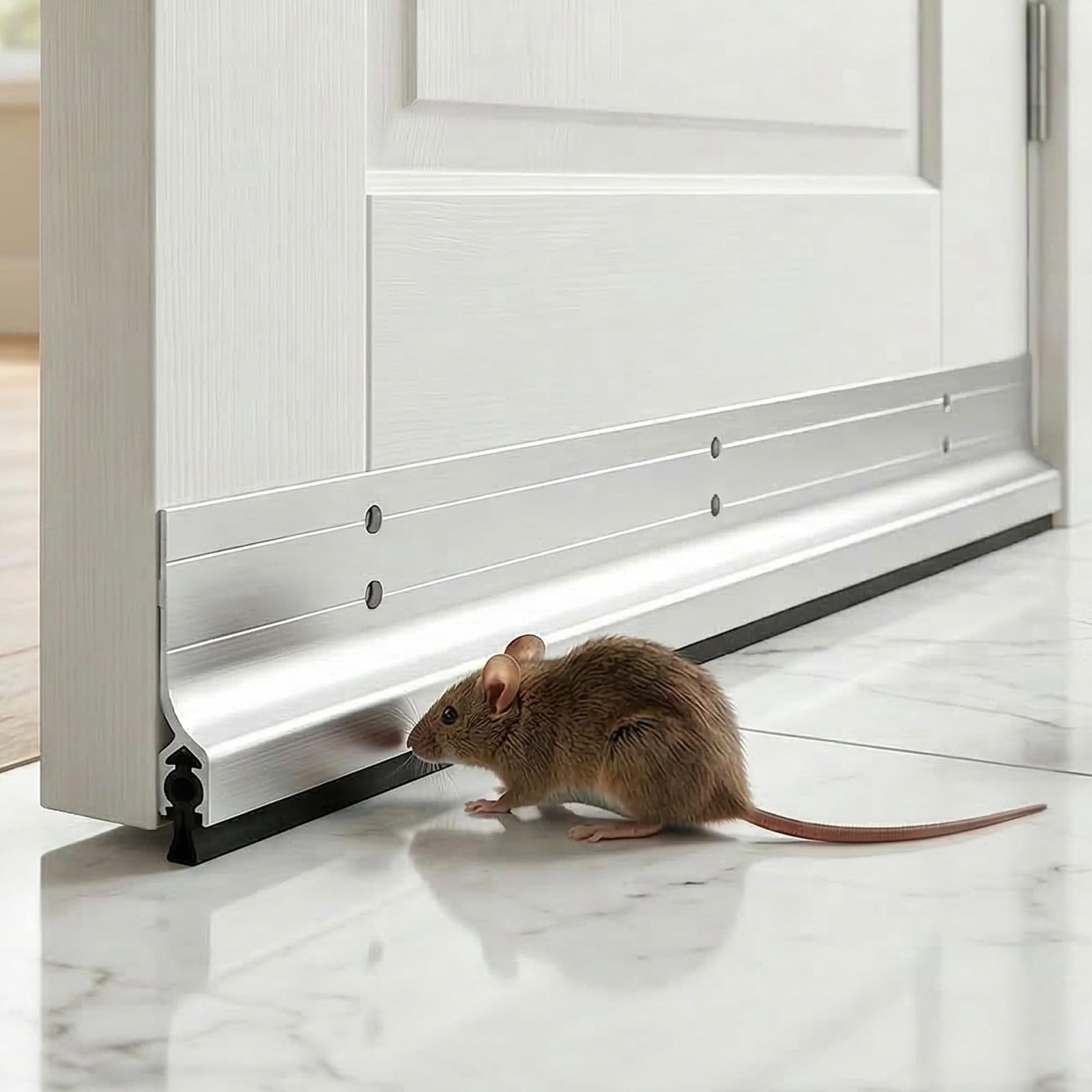
Mice in the Garage: How to Exclusion-Proof Your Doors and Outlets

Most homeowners treat the garage as a buffer zone between the outdoors and their living space, yet for a house mouse, a standard garage is an open invitation. Warm engine blocks, stored birdseed, cardboard boxes, and undisturbed wall cavities offer everything rodents need to survive a cold snap. Worse, once mice establish a foothold in an attached garage, they rarely stay put—interior utility penetrations and shared framing give them a direct highway into kitchens, basements, and attics.
Stopping an infestation before it starts comes down to physical exclusion: sealing the structural gaps mice use to get inside. While many homeowners focus on trapping, traps only remove the mice already present. To keep new ones out permanently, you have to harden the two most frequently overlooked entry points in any garage: exterior doors and electrical or utility outlets.

Why Garages Attract Mice and How Small a Gap They Need

A house mouse has a collapsible skeleton and no rigid collarbone, allowing it to squeeze through any opening wide enough for its skull. In practical terms, a gap of just one-quarter inch—roughly the diameter of a standard No. 2 pencil—is wide enough for an adult mouse to slip through.
Garages naturally develop dozens of quarter-inch openings over time. Concrete slabs settle, wooden door jambs swell and shrink with humidity, rubber weatherstripping hardens and cracks, and electricians or plumbers rarely seal the holes they drill behind drywall. Combined with easy food sources like pet kibble, grass seed, and trash cans, even a tiny breach at floor level turns into a reliable entry point.

Securing the Overhead Garage Door

The main overhead garage door is the largest moving barrier in your home, and its bottom corners are the single most common entry point for rodents. Over several seasons, standard vinyl bottom seals flatten out, dry rot, or pull away from the aluminum retainer track, leaving daylight visible along the concrete threshold.

Replace Worn Bottom Seals with Rodent-Resistant Astragals

Inspect the bottom of your closed garage door from the inside during bright daylight. Anywhere you see light peeking underneath is an open door for mice. Standard hollow vinyl bulb seals are soft enough for rodents to chew through in a single night. Instead, install a heavy-duty EPDM rubber astragal reinforced with stainless steel mesh or braided steel fibers. These rodent-proof seals stay flexible in freezing temperatures and resist chewing even when a mouse actively tests the edge.

Reinforce the Bottom Corners and Side Tracks

Even a brand-new bottom seal often leaves small gaps where the rubber meets the vertical metal side tracks. Concrete floors frequently slope slightly toward the driveway, creating a triangular opening at one or both corners. You can close this vulnerability by installing galvanized steel corner guards or rodent-block aluminum shields along the lower six inches of the door frame and track base. Pairing these metal shields with fresh vinyl or brush-style perimeter weatherstripping along the top and sides eliminates drafts and blocks climbing mice from squeezing past the door panels.

Check the Opener Force and Limit Settings

Sometimes a garage door leaves a gap simply because the opener stops a fraction of an inch too early. Adjust the down-limit switch on your garage door opener so the bottom seal compresses firmly against the concrete slab without bowing the door panels or triggering the safety reverse sensor.

Sealing Pedestrian Entry Doors

Most garages include at least one standard hinged entry door leading either to the backyard or directly into the house. Both doors require attention: the exterior door keeps mice out of the garage, while the interior door protects your living quarters if a rodent ever slips past the main bay door.

Upgrade Door Sweeps and Thresholds

Standard vinyl fin sweeps wear down quickly against rough concrete. Replace flimsy sweeps with a heavy-duty aluminum door sweep fitted with a dense nylon brush or thick neoprene rubber blade that makes full contact across the entire width of the threshold. If the aluminum threshold itself has dipped or corroded, raise the adjustable threshold plate or install a new threshold with an integrated vinyl bumper so no gap remains underneath.

Seal Door Jambs and Trim Gaps

Run your hand along the vertical door jambs and the header at the top of the frame. If you feel air moving, install compression foam or V-strip kerf weatherstripping inside the door stop. Do not overlook the exterior casing trim where wood meets brick, siding, or concrete. Fill gaps wider than an eighth of an inch with exterior-grade polyurethane caulk, which remains elastic through seasonal temperature swings rather than cracking like basic painter’s caulk.

Exclusion-Proofing Electrical Outlets, Switches, and Utility Boxes

Homeowners routinely seal doors only to wonder how mice keep appearing inside an otherwise tight garage. The answer often sits behind the drywall. Electrical outlets, light switches, subpanels, and low-voltage cable boxes create direct openings into the hollow wall cavities where mice travel freely between the garage, exterior walls, and interior rooms.

Seal Behind Outlet and Switch Cover Plates

Turn off power at the breaker panel before removing any plastic or metal outlet cover plates. Once the cover is off, look closely around the edges of the electrical box. Drywall installers frequently cut oversized holes, leaving quarter-inch to half-inch gaps between the drywall edge and the plastic or metal junction box.
To close these gaps safely:
  • Install foam outlet and switch gaskets behind every cover plate to block air drafts and close minor perimeter gaps.

  • Pack wider gaps around the outside of the electrical box with copper mesh rather than steel wool, since copper will not rust or stain drywall over time.

  • Apply a bead of fire-rated acoustic or intumescent caulk around the exterior perimeter of the junction box where it meets the drywall, ensuring no sealant enters the inside of the box or touches wire connections.

Plug Unused Knockouts and Conduit Openings

Metal electrical subpanels, junction boxes, and garage door opener outlets often have circular knockout tabs that were punched out during installation and never used. Mice easily enter metal panels through open half-inch knockouts. Snap steel knockout seals into every unused opening on metal boxes and breaker panels. Where PVC or metal conduit enters the garage wall or ceiling, seal the annular space around the pipe with copper mesh capped with fire-block sealant.

Protect Exterior Wall Penetrations Near Outlets

Walk the outside perimeter of your garage and inspect every spot where wiring, outdoor outlets, hose bibs, or HVAC lines pass through the siding or foundation. Builders commonly use expanding spray foam around exterior penetrations, but standard polyurethane foam offers virtually zero resistance to rodent teeth—mice chew through it effortlessly. Scrape away exposed, deteriorating foam, pack the cavity tightly with stainless steel or copper exclusion mesh, and seal the outer surface with silicone or polyurethane caulk to keep out both pests and moisture.

Materials That Actually Stop Mice (and Materials to Skip)

Choosing the wrong barrier material wastes time and invites repeat break-ins. Keep these material rules in mind when working around your garage:
  • Use copper mesh or stainless steel wool: Woven metal mesh resists chewing, does not deteriorate in damp garage air, and flexes easily into irregular gaps around pipes and electrical boxes.

  • Use 24-gauge galvanized sheet metal or quarter-inch hardware cloth: For larger openings near door framing or foundation vents, rigid metal sheeting prevents mice from gnawing at wood edges.

  • Skip standard expanding foam alone: Foam works well as a backing or air seal only when paired with dense metal mesh embedded inside the gap.

  • Skip plastic corner guards and thin rubber strips: Any soft polymer without metal reinforcement can be chewed through overnight if a mouse smells food inside.

Maintaining a Mouse-Free Garage Year-Round

Once your doors and outlets are sealed, a few simple habits keep rodents from testing your defenses. Store birdseed, pet food, grass seed, and dry fertilizer in heavy-duty galvanized steel cans or thick gasket-sealed plastic bins rather than paper bags. Replace cardboard storage boxes with stackable plastic totes, and keep shelves at least six inches off the concrete floor so you can spot droppings or nesting debris early.
Make a quick perimeter check every fall before temperatures drop. Testing your garage door bottom seal with a flashlight, checking door sweeps, and inspecting outlet covers takes less than thirty minutes—and keeps mice outside where they belong.