
Asbestos Siding on an Old House: Is It Safer to Remove It or Cover It?

Finding out that an older home is clad in asbestos cement siding can stop a renovation plan in its tracks. Built heavily into American residential construction from the 1920s through the late 1970s, these rigid, textured shingles were prized because they resisted fire, rot, termites, and harsh weather far better than wood. Today, however, the word asbestos immediately raises alarms about health risks, strict disposal rules, and resale complications.
When faced with intact or aging asbestos siding, homeowners generally have two practical paths: encapsulation (covering the existing shingles with new siding) or abatement (full professional removal). Neither choice is universally better. The safer, smarter option depends on the physical condition of the shingles, your local building regulations, your remodeling goals, and how long you plan to stay in the house.

Understanding the Real Risk of Asbestos Cement Siding

Not all asbestos-containing materials pose the same level of danger. Environmental and workplace safety agencies distinguish between friable and non-friable asbestos. Friable materials, such as loose attic insulation or crumbling pipe wrap, can be crushed into airborne dust with light hand pressure.
Asbestos cement siding, often sold under brand names like Transite, is non-friable. The mineral fibers are tightly bound inside a dense Portland cement matrix. When the shingles are intact, properly painted, and left undisturbed, they do not release hazardous fibers into the air around your home.
The danger begins when those shingles are cut, drilled, sanded, power-washed, cracked, or shattered. Mechanical friction breaks the cement binder and turns trapped fibers into microscopic airborne dust that can be inhaled. In short, undamaged asbestos siding sitting quietly on your exterior walls is far safer than a careless DIY demolition project.

Option 1: Covering It Up (Encapsulation)

Encapsulation involves leaving the existing asbestos siding securely attached to the house and installing a new exterior layer—most commonly vinyl, engineered wood, or insulated foam-backed siding—directly over it. In many U.S. municipalities, covering intact asbestos siding is both legal and widely recommended by building inspectors.

Why Covering Is Often the Safer Choice

Leaving the shingles untouched avoids the single biggest hazard of asbestos: disturbing the fibers. Because no shingles are pried off, snapped, or hauled away, airborne fiber release remains near zero when installers follow proper techniques.
Encapsulation also brings practical benefits:
  • Lower upfront cost: Professional asbestos abatement alone can add $5,000 to $15,000 or more to an exterior remodel before you even pay for new siding. Covering lets you put your budget toward quality exterior cladding and trim.

  • Added thermal insulation: Installing rigid foam board furring strips and new siding over the existing layer adds a slight boost in R-value and helps reduce drafts.

  • Faster project timeline: Without containment tents, air-scrubbing equipment, and hazardous waste manifests, a standard siding crew can finish the job in days rather than weeks.

Risks and Limitations of Covering Asbestos Siding

Encapsulation is not completely hands-off, nor is it right for every structure. To install new siding over asbestos shingles, contractors still have to fasten furring strips or starter channels into the wall studs. Drilling or nailing directly through brittle asbestos tiles can crack them and release dust unless installers wet the surface, use hand tools rather than high-speed power saws, and drill carefully through pre-existing seams.
Beyond installation mechanics, keep these drawbacks in mind:
  • Hidden moisture and sheathing rot: Adding a second siding layer can trap moisture if water gets behind the new cladding, making it harder to spot deteriorating wood sheathing underneath.

  • Thickness around windows and doors: An extra layer pushes the exterior wall plane outward by an inch or more, which often requires extending window casings, door trim, and exterior electrical boxes so fixtures do not look sunken.

  • Future disclosure remains: Covering asbestos does not erase it. When you sell the home, you are still legally obligated in most states to disclose the presence of encapsulated asbestos siding to buyers.

Option 2: Full Professional Removal (Abatement)

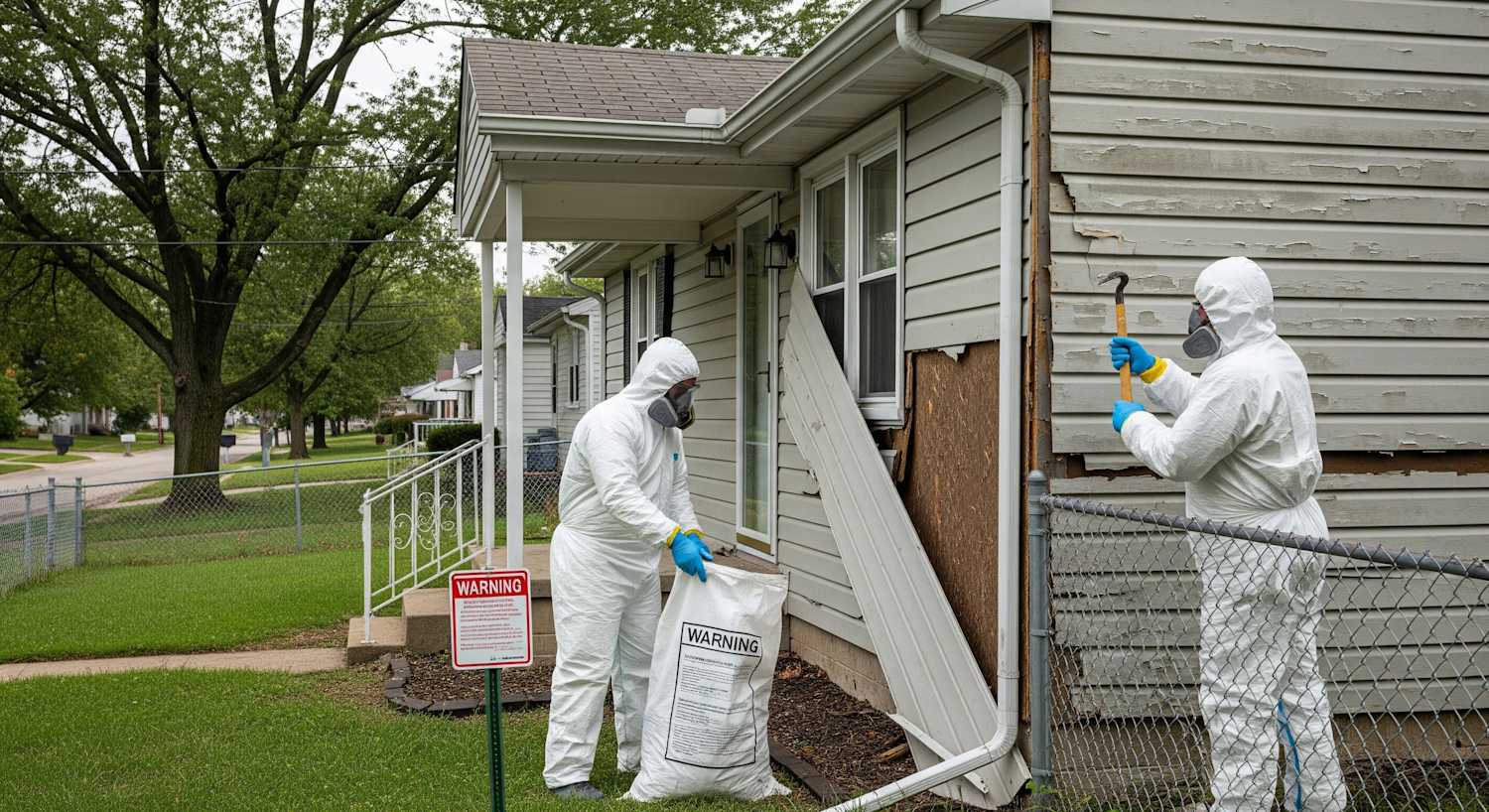
Full abatement means stripping every asbestos shingle down to the bare wall sheathing, double-bagging or wrapping the waste in heavy-duty polyethylene sheeting, and transporting it to a state-approved hazardous waste landfill.

When Removal Is the Right Move

Sometimes covering is simply not viable or wise. Full removal is usually the better choice when:
  • The siding is already failing: If large sections of shingles are cracked, flaking, bowed, or falling off the nails, they are no longer stable enough to hold furring strips safely.

  • You plan major structural renovations: Moving windows, adding an addition, or replacing rotted exterior sheathing requires tearing into the walls anyway. Removing the asbestos upfront prevents repeated exposure hazards later.

  • You want maximum resale simplicity: Many buyers hesitate when they read an asbestos disclosure, even if the siding is neatly covered. Removing it cleanly eliminates that objection for future buyers and home inspectors.

What Safe Abatement Looks Like

While federal rules often exempt single-family homeowners from certain commercial abatement mandates, state and local air-quality boards frequently enforce strict rules on how asbestos siding is removed, wetted, and disposed of—and standard municipal landfills will reject unpermitted asbestos debris.
Licensed abatement contractors follow strict containment protocols:
  • Perimeter plastic sheeting: Technicians lay heavy 6-mil plastic tarps along the ground around the foundation to catch every fallen chip or nail.

  • Continuous wet methods: Shingles are misted with amended water before and during removal so fibers stay heavy and clumped rather than drifting into the air.

  • Intact prying instead of breaking: Workers clip or pull individual fasteners gently to lift whole shingles off the wall rather than smashing them with pry bars.

  • HEPA vacuuming and sealed disposal: After removal, the sheathing and ground are cleaned with HEPA-filtered vacuums, and all waste is sealed in labeled leak-tight containers for certified disposal.

How to Make the Right Decision for Your Home

Before calling contractors, walk the perimeter of your house and inspect the siding closely—without scraping, sanding, or prying at loose edges. Look for hairline cracks, missing tiles, soft spots near rooflines, and places where splashback from gutters hits the lower courses.
If the shingles are solid, flat, and well-secured, and you simply want to update curb appeal or add insulation without altering window openings, covering the siding with a qualified contractor experienced in encapsulation is typically safer, faster, and far easier on your wallet.
On the other hand, if the siding is brittle and deteriorating, if you suspect water damage behind the walls, or if you are planning window replacements and exterior layout changes, investing in licensed abatement clears the slate permanently.

Crucial Safety Rules While Living with Asbestos Siding

If you decide to keep your existing asbestos siding—either exposed and freshly painted or encapsulated beneath new cladding—follow a few basic precautions to protect your household:
  • Never pressure-wash asbestos shingles: High-pressure water blasts away the protective paint layer, erodes the cement surface, and scatters asbestos fibers across your yard. Clean dirty siding gently with a garden hose, mild detergent, and a soft-bristle brush.

  • Keep exterior paint intact: A good coat of high-quality acrylic latex masonry paint seals the surface and prevents weathering. Paint directly over clean, sound shingles without dry-scraping or sanding.

  • Warn contractors before any exterior work: Anyone installing exterior outlets, cable lines, awnings, or outdoor faucets needs to know the siding contains asbestos so they do not cut into it dry with power tools.

Handled with respect rather than panic, older asbestos siding does not have to derail your homeownership plans. By matching your strategy to the actual condition of the exterior walls, you can protect your family’s health, stay compliant with local disposal laws, and keep your renovation budget under control.