
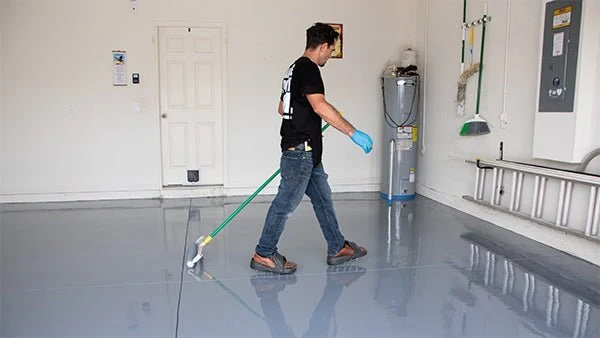
Epoxy Garage Floors: Why Dumping Leftover Resin Down the Drain is a Disaster

Finishing a DIY epoxy garage floor feels great—until you look down at the mixing bucket and realize you still have a quart of leftover resin and hardener sitting at the bottom. Because the clock is ticking on the pot life and the mixture looks just like thick paint, a surprising number of homeowners walk straight over to the utility sink, floor drain, or storm grate and rinse it down with hot water.
That single shortcut can trigger thousands of dollars in plumbing damage, hazardous chemical reactions, and environmental code violations. Unlike water-based latex wall paint, two-part epoxy floor coatings do not dry through evaporation. They cure through an irreversible chemical reaction that continues even when submerged in water—turning your drainpipes into solid plastic bottlenecks.

How Two-Part Epoxy Actually Cures Inside Pipes

To understand why pouring epoxy down a drain is so destructive, it helps to look at how the chemistry works. Standard garage floor kits consist of two separate liquids: Part A (the epoxy resin) and Part B (the polyamine or polyamide hardener).
Once you stir those two components together, cross-linking begins immediately. Molecules bond together into a dense, thermosetting polymer network. Crucially, this curing process is exothermic, meaning it generates its own heat, and it does not require air exposure to harden.
When you pour mixed or unmixed epoxy into a utility sink or floor drain:
  • Water does not dilute or neutralize it: Because epoxy resin is heavier than water and hydrophobic, it sinks straight to the lowest point of your plumbing—usually the P-trap directly beneath the sink or floor grate.

  • It cures underwater: Even fully submerged in cold tap water, mixed epoxy will solidify into a rock-hard, non-porous plug within hours.

  • Unmixed components still wreck pipes: Pouring leftover Part A or Part B down the drain separately is no safer. Uncured epoxy resin is thick, sticky, and insoluble in water, coating pipe walls and trapping hair, grease, and soap scum until a stubborn blockage forms. If leftover resin and hardener later meet inside a slow-moving sewer lateral, they can partially cure into a rubbery or rigid mass deep underground.

The Plumbing Nightmare: Why Snakes and Drain Cleaners Fail

A standard clog caused by grease or hair can usually be cleared with a plumber’s auger or enzymatic cleaner. Cured epoxy inside a drain line cannot be dissolved by any household chemical. Once cross-linked, epoxy resists bleach, lye, sulfuric acid drain openers, and boiling water.

Ruined P-Traps and In-Slab Floor Drains

If you are lucky, the epoxy settles in an exposed plastic or brass P-trap under a basement or garage laundry sink. In that best-case scenario, a plumber can cut out the trap assembly and glue in a new section of PVC pipe for a few hundred dollars.
Garage floor drains and basement utility lines are a far worse story. Those pipes are buried directly beneath four to six inches of reinforced concrete slab. When epoxy flows past the trap and hardens inside a horizontal drain line under the garage floor, a standard drain snake simply bounces off the solid polymer plug. Clearing it often requires jackhammering through the concrete slab, excavating the damaged pipe section, replacing the line, and repouring concrete—a repair bill that routinely climbs past $3,000 to $8,000.

Thermal Damage to PVC and ABS Pipes

Mixed epoxy generates significant heat as it cures, especially when pooled in a confined volume like a pipe bend. A thick mass of fast-curing polyaspartic or high-solids epoxy can easily reach temperatures above 150 to 200 degrees Fahrenheit. That exothermic heat spike can warp, soften, or melt standard Schedule 40 PVC and ABS drain lines, causing leaks behind walls or under slabs even before the plug fully hardens.

Environmental Harm and Municipal Code Violations

Beyond tearing up your own plumbing, dumping epoxy resin down any indoor sink or outdoor storm drain creates serious environmental and legal consequences.

Municipal Sewer Systems and Septic Tanks

In homes connected to a municipal sewer, uncured resin components and solvents travel downstream to wastewater treatment facilities. Liquid epoxy chemicals are toxic to the beneficial bacteria treatment plants rely on to break down organic waste, and sticky resins foul pumps and filtration screens.
If your home relies on a septic tank and drain field, pouring epoxy or solvent rinse water down the drain is devastating. Toxic curing agents kill off the anaerobic bacteria inside the septic tank, halting waste digestion and potentially coating the perforated pipes in your leach field so soil can no longer absorb effluent.

Storm Drains Lead Directly to Local Waterways

Many homeowners mistakenly assume street storm grates or driveway trench drains go to a water treatment facility. In virtually all U.S. communities, storm drains discharge untreated water straight into local creeks, rivers, wetlands, and lakes. Uncured epoxy resins and amine hardeners are acutely toxic to fish, amphibians, and aquatic invertebrates. Dumping chemical coatings into a storm drain violates federal and state clean-water ordinances and can carry steep municipal fines.

How to Safely Dispose of Leftover Epoxy Floor Coating

Proper disposal takes almost no extra effort once you know how thermosetting coatings behave. The golden rule is simple: solidify liquid epoxy into an inert plastic block before discarding it.

Step 1: Mix Remaining Part A and Part B Together

If you have leftover unmixed resin and hardener in separate cans, pour them together into a clean, sturdy disposable bucket (never a thin plastic cup that could melt from curing heat) and stir thoroughly for two to three minutes. Once fully cured, two-part epoxy becomes an inert, non-hazardous solid plastic that is safe for standard household trash collection in most jurisdictions.

Step 2: Manage Exothermic Heat Safely

Because larger volumes of mixed epoxy generate intense heat as they cure, follow these precautions while waiting for the batch to harden:
  • Keep volumes shallow: If you have more than a quart of leftover mixed epoxy, pour it out onto a sheet of heavy cardboard, a disposable aluminum foil pan, or a thick plastic drop cloth in a thin layer rather than leaving a deep pool in a bucket. Thin layers dissipate heat quickly and cure without smoking or melting containers.

  • Set the container outdoors away from flammables: Place the curing bucket or tray on concrete or gravel outside in a well-ventilated area, safely away from wood siding, dry leaves, solvent cans, and curious pets.

  • Allow 24 to 48 hours for full cure: Verify that the material is completely hard, cool to the touch, and free of sticky wet spots before placing it into your regular trash bin.

Step 3: Handle Unmatched Single-Part Leftovers Properly

What if you only have leftover Part A resin and ran completely out of Part B hardener? Without the hardener, Part A will never cure on its own. Do not throw liquid resin in the trash or pour it down a drain. Instead, seal the lid tightly, label the can clearly, and drop it off at your county Household Hazardous Waste (HHW) collection facility. Most municipal HHW centers accept uncured paints, resins, and solvents from residents free of charge.

Smart Habits to Prevent Leftover Epoxy in the First Place

The easiest way to avoid disposal headaches is to minimize waste while coating your floor:
  • Mix in smaller, manageable batches: Rather than dumping an entire two-gallon kit at once, split Part A and Part B carefully by exact manufacturer volume ratios into two smaller batches. If you finish the floor halfway through the second batch, your remaining unmixed cans stay usable for future touch-ups or smaller projects.

  • Wipe tools dry before cleaning: Scrape excess epoxy off rollers, squeegees, and stir sticks onto cardboard before the coating sets. Treat roller covers and chip brushes as disposable items—let them cure solid on cardboard and toss them out rather than rinsing them in a sink.

  • Coat secondary concrete surfaces: If you finish your garage floor with a quart of mixed epoxy still active in the bucket, use it immediately on porch steps, a basement utility pad, or concrete patio pavers rather than letting it go to waste.

Taking ten minutes to cure leftover resin safely on cardboard protects your home’s drain lines, keeps local waterways clean, and ensures your garage floor upgrade ends on a win rather than an emergency plumber’s visit.