
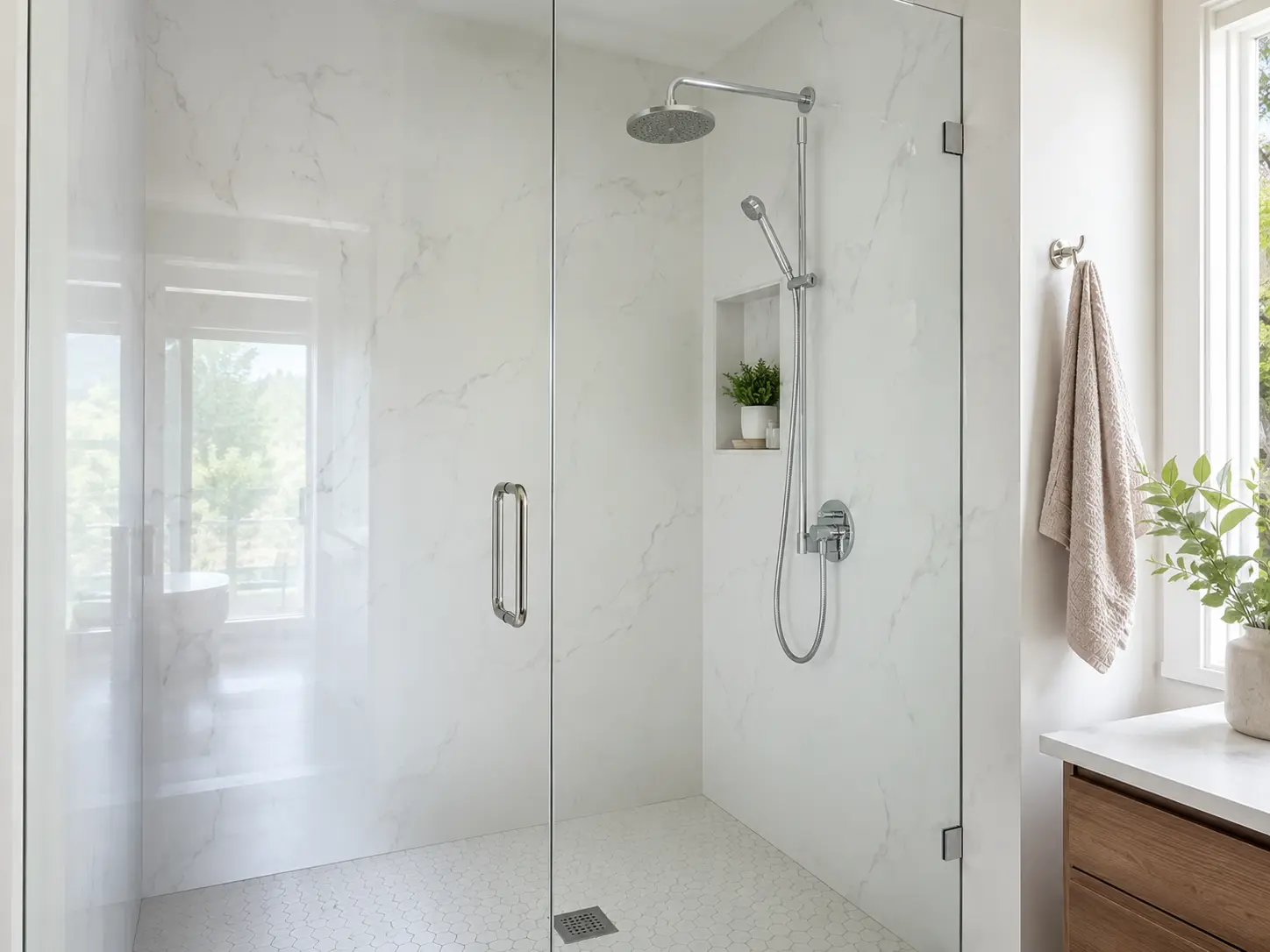
Groutless Shower Walls: The Best Solid Surface Alternatives to Tile

Ask almost any homeowner what they dislike most about cleaning their bathroom, and grout lines will sit right near the top of the list. Even with regular sealing and diligent scrubbing, porous cementitious grout absorbs soap scum, body oils, and hard water minerals, creating an ideal environment for stubborn pink mildew and dark mold stains. Over time, grout also cracks as houses settle, letting moisture sneak behind tiles into wall framing.
That frustration has pushed groutless shower wall systems from a niche commercial solution into mainstream residential remodeling. By replacing dozens of small tiles and hundreds of linear feet of grout with large-format, non-porous panels, you get a sleek, contemporary look that wipes clean in seconds with a squeegee and mild soap. Understanding the strengths, quirks, and true costs of the leading solid-surface alternatives helps you pick the right material for your bathroom’s style and budget.

Why Homeowners Are Moving Away from Traditional Shower Tile

Ceramic and porcelain tile remain classic choices, yet their installation and upkeep carry real trade-offs. Setting tile properly requires waterproof backer board, liquid or sheet waterproofing membranes, thinset mortar, precise spacing, grouting, and periodic resealing. Because labor accounts for the bulk of a custom tile shower’s price tag, intricate patterns or mosaic accents can easily push a mid-sized shower remodel past ten thousand dollars.
Groutless shower panels flip that equation. Most systems consist of three or four full-height sheets—covering the back wall and two side walls—joined cleanly at the corners with color-matched silicone sealant and trim profiles. Without grout lines to trap moisture, maintenance drops dramatically, installation timelines shrink from a week or two down to a day or two, and the uninterrupted surfaces make even compact alcove showers feel noticeably larger.

The Best Solid Surface Alternatives to Shower Tile

Not all groutless wall panels are built the same. They vary widely in core composition, realistic texture, thickness, and price point.

1. Acrylic-Mineral Solid Surface Panels (Corian-Style Composites)

True solid-surface panels—made from a homogeneous blend of acrylic polymers and natural alumina trihydrate minerals—represent the gold standard for residential groutless showers. Because the color and veining run all the way through the full thickness of the sheet (typically 1/4 inch to 1/2 inch thick), these panels behave very differently from thin plastic liners.
  • Key Advantages: Minor scratches, scuffs, or hard-water stains can be buffed out easily with a fine abrasive pad, restoring the factory matte or satin finish. Panels can be fabricated with nearly invisible color-matched seams, custom recessed soap niches, and integrated corner caddies.

  • Drawbacks: Solid-surface sheets are heavy, require specialized woodworking tools with carbide blades to cut cleanly, and sit at the higher end of the price spectrum, often rivaling mid-range porcelain tile in installed cost.

2. Cultured Marble and Engineered Stone Panels

Cultured marble blends crushed natural limestone or marble dust with high-strength polyester resin, topped with a clear, non-porous gel coat. Modern matte-finish cultured stone and engineered quartz wall slabs have moved far beyond the glossy, dated swirls of the 1980s, offering crisp Carrara veining, warm travertine tones, and concrete-inspired textures.
  • Key Advantages: The non-porous gel coat requires zero sealing and resists soap scum buildup. Panels are cast to order in standard alcove dimensions (such as 60 by 32 inches or 48 by 36 inches) with matching shower bases, curbs, and trim moldings.

  • Drawbacks: If a heavy object chips through the outer gel coat layer, repairing the damage cleanly is more difficult than sanding a homogeneous acrylic solid-surface panel. Harsh abrasive cleaners can also dull the finish over time.

3. Porcelain Slabs and Gauged Porcelain Tile Panels

If you love the authentic depth and crisp graphic veining of stone or high-end tile—and do not want any plastic or resin feel—large-format gauged porcelain slabs deliver a virtually groutless finish using genuine fired ceramic material. Measuring up to 5 feet wide by 10 feet tall and roughly 6mm (1/4 inch) thick, a single slab can span an entire shower wall from pan to ceiling.
  • Key Advantages: Porcelain slabs are completely impervious to water, heat, steam, and household cleaners. They deliver unmatched luxury aesthetics, especially in book-matched marble designs where veining mirrors seamlessly across corner joints.

  • Drawbacks: Handling fragile 10-foot porcelain sheets in tight residential hallways requires specialized suction frames, ultra-flat wall framing, and installers certified in large-format thinset coverage. Material and labor costs typically place porcelain slabs in the luxury tier.

4. Composite SPC and PVC-Core Wall Panels

For homeowners seeking a budget-friendly, DIY-accessible alternative, stone-polymer composite (SPC) and rigid multi-layer PVC wall panels have surged in popularity. Built with a dense limestone-and-polymer core topped with a high-definition printed decorative layer and a UV-cured wear coat, these panels often feature tongue-and-groove vertical edges that lock together seamlessly.
  • Key Advantages: Lightweight and easy to cut with standard utility knives or fine-tooth saws, SPC panels can often be adhered directly over structurally sound existing tile or greenboard, saving thousands in demolition costs.

  • Drawbacks: While durable against everyday splashes, thinner composite panels feel less substantial to the touch than solid acrylic or cultured stone, and deep gouges cannot be sanded out.

5. High-Density Acrylic and Fiberglass Wall Surrounds

Standard thermoformed acrylic wall kits remain the most economical way to eliminate grout in guest bathrooms, rental properties, and quick tub-to-shower conversions. Higher-tier thick-gauge acrylic sheets offer much better rigidity and gloss retention than entry-level fiberglass units.
  • Key Advantages: Low upfront cost, fast one-day installation, and molded-in shelving options make acrylic surrounds practical when budget and turnaround speed are top priorities.

  • Drawbacks: Limited color palettes, fewer realistic stone textures, and a distinctly utilitarian feel compared to solid-surface composites or porcelain slabs.

Cost Comparison: How Groutless Walls Stack Up Against Tile

While groutless panels save heavily on installation labor, material prices vary significantly depending on the tier you choose:
  • Thick-Gauge Acrylic Surrounds: Typically $1,500 to $3,500 installed for a standard three-wall alcove, including a matching shower pan.

  • SPC / Rigid Composite Panel Kits: Generally $2,000 to $4,500 installed, or $800 to $1,800 for materials alone if tackled as a DIY project.

  • Cultured Marble and Engineered Stone: Usually $3,500 to $6,500 installed, depending on panel thickness, custom niches, and wall height.

  • Homogeneous Solid Surface (Acrylic-Mineral): Commonly $4,500 to $8,500 installed, reflecting higher raw material costs and custom fabrication.

  • Gauged Porcelain Slabs: Typically $7,500 to $14,000+ installed due to specialized transport, substrate preparation, and certified setting labor.

By comparison, a custom mid-range porcelain tile shower with proper waterproofing, niche framing, and grouting usually lands between $5,000 and $9,500 installed.

Critical Installation Details That Prevent Leaks

Eliminating grout removes thousands of weak points, yet a groutless shower is only as waterproof as its corners, seams, and fixture penetrations. Even the highest-end solid-surface panels will fail if installers cut corners behind the scenes.

Substrate Flatness and Moisture Resistance

Solid-surface panels and porcelain slabs are unforgiving over bowed studs. Walls must be framed plumb and flat within 1/8 inch over 8 feet so panels bond evenly without hollow spots. Even though the panels themselves are waterproof, installing them over cement backer board or waterproof foam wallboard rather than standard paper-faced drywall protects your framing if caulk joints ever need maintenance years down the road.

Silicone Corners Instead of Hard Grout

Never allow an installer to fill inside vertical corners or the joint where wall panels meet the shower pan with rigid grout or standard painter’s caulk. Houses expand, contract, and settle slightly with seasonal humidity changes. Those joints must be sealed with 100 percent neutral-cure silicone sealant—often color-matched to the panel—which stays permanently flexible and resists mildew growth.

Properly Sized Escutcheons and Recessed Niches

Every hole drilled through a solid-surface panel for a showerhead arm, mixing valve, or handheld slide bar should have a 1/8-inch clearance gap around the pipe, filled completely with silicone before the trim plate goes on. If you want built-in storage, opt for prefabricated solid-surface niches sealed into a framed wall opening or corner caddies bonded directly to the panel surface rather than piecing together sharp corner joints on site.

How to Care for Solid Surface Shower Walls

Keeping groutless walls looking new requires minimal effort, provided you avoid products designed for scrubbing stubborn tile grout:
  • Keep a rubber squeegee in the shower: A quick 15-second wipe down the walls after the last shower of the day prevents hard-water mineral spots before they dry.

  • Stick to gentle, non-abrasive cleaners: Warm water, a drop of dish soap, or a pH-neutral bathroom spray paired with a microfiber cloth handles routine cleaning without dulling gel coats or sealers.

  • Skip bleach, scouring powders, and abrasive pads: Harsh chemicals and gritty cleansers can etch acrylic surfaces and strip protective wear layers on composite panels.

For homeowners tired of spending Saturday mornings scrubbing discolored grout lines, modern solid-surface shower walls offer a smart, durable upgrade. By matching the core material to your budget and ensuring clean silicone sealing at every joint, you can enjoy a brighter, easier-to-clean bathroom that holds its appearance for decades.