

Understanding the Real Risk of Asbestos Cement Siding
Option 1: Covering It Up (Encapsulation)
Why Covering Is Often the Safer Choice
-
Lower upfront cost: Professional asbestos abatement alone can add $5,000 to $15,000 or more to an exterior remodel before you even pay for new siding. Covering lets you put your budget toward quality exterior cladding and trim.
-
Added thermal insulation: Installing rigid foam board furring strips and new siding over the existing layer adds a slight boost in R-value and helps reduce drafts.
-
Faster project timeline: Without containment tents, air-scrubbing equipment, and hazardous waste manifests, a standard siding crew can finish the job in days rather than weeks.
Risks and Limitations of Covering Asbestos Siding
-
Hidden moisture and sheathing rot: Adding a second siding layer can trap moisture if water gets behind the new cladding, making it harder to spot deteriorating wood sheathing underneath.
-
Thickness around windows and doors: An extra layer pushes the exterior wall plane outward by an inch or more, which often requires extending window casings, door trim, and exterior electrical boxes so fixtures do not look sunken.
-
Future disclosure remains: Covering asbestos does not erase it. When you sell the home, you are still legally obligated in most states to disclose the presence of encapsulated asbestos siding to buyers.
Option 2: Full Professional Removal (Abatement)
When Removal Is the Right Move
-
The siding is already failing: If large sections of shingles are cracked, flaking, bowed, or falling off the nails, they are no longer stable enough to hold furring strips safely.
-
You plan major structural renovations: Moving windows, adding an addition, or replacing rotted exterior sheathing requires tearing into the walls anyway. Removing the asbestos upfront prevents repeated exposure hazards later.
-
You want maximum resale simplicity: Many buyers hesitate when they read an asbestos disclosure, even if the siding is neatly covered. Removing it cleanly eliminates that objection for future buyers and home inspectors.
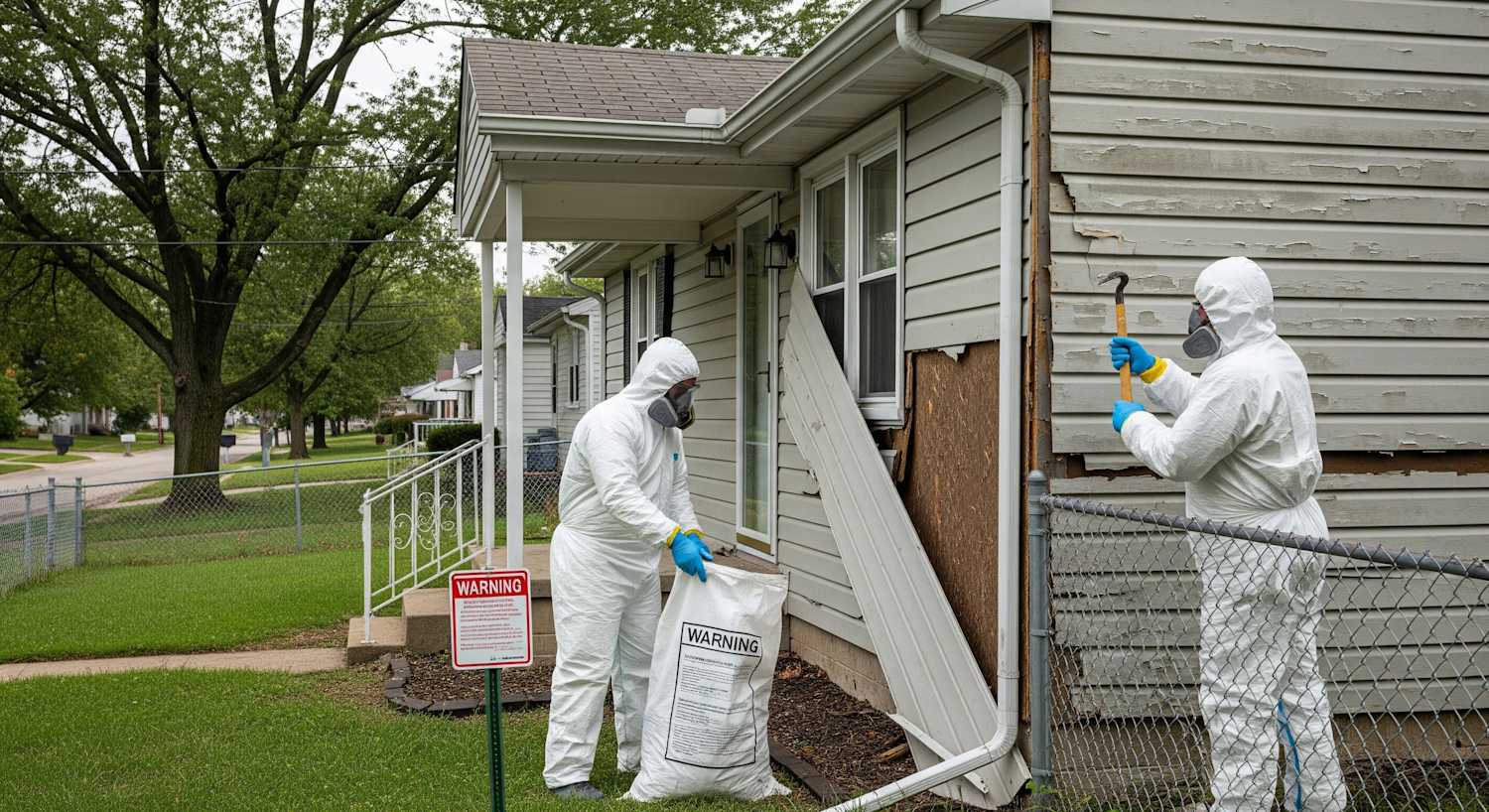
What Safe Abatement Looks Like
-
Perimeter plastic sheeting: Technicians lay heavy 6-mil plastic tarps along the ground around the foundation to catch every fallen chip or nail.
-
Continuous wet methods: Shingles are misted with amended water before and during removal so fibers stay heavy and clumped rather than drifting into the air.
-
Intact prying instead of breaking: Workers clip or pull individual fasteners gently to lift whole shingles off the wall rather than smashing them with pry bars.
-
HEPA vacuuming and sealed disposal: After removal, the sheathing and ground are cleaned with HEPA-filtered vacuums, and all waste is sealed in labeled leak-tight containers for certified disposal.
How to Make the Right Decision for Your Home
Crucial Safety Rules While Living with Asbestos Siding
-
Never pressure-wash asbestos shingles: High-pressure water blasts away the protective paint layer, erodes the cement surface, and scatters asbestos fibers across your yard. Clean dirty siding gently with a garden hose, mild detergent, and a soft-bristle brush.
-
Keep exterior paint intact: A good coat of high-quality acrylic latex masonry paint seals the surface and prevents weathering. Paint directly over clean, sound shingles without dry-scraping or sanding.
-
Warn contractors before any exterior work: Anyone installing exterior outlets, cable lines, awnings, or outdoor faucets needs to know the siding contains asbestos so they do not cut into it dry with power tools.